Quick answer: AI is already used in manufacturing for demand forecasting, supply chain optimization, automated quality inspection, predictive maintenance, and product design. Together, these use cases cut costs, reduce downtime, and improve product quality. According to Markets and Markets, the global AI-in-manufacturing market is projected to reach $20.8 billion by 2028.
Why manufacturers are turning to AI now
Labor shortages are hitting factories hard. In a 2024 Deloitte survey, over 80% of manufacturing professionals said labor turnover had disrupted production that year. That disruption is expected to continue into 2025, driving up costs across the value chain.
AI helps close that gap. It cuts costs and boosts efficiency without needing more people on the floor. Below are five ways manufacturers are using it today.
1. Accurate Demand Forecasting, Aiding Strategic Decisions
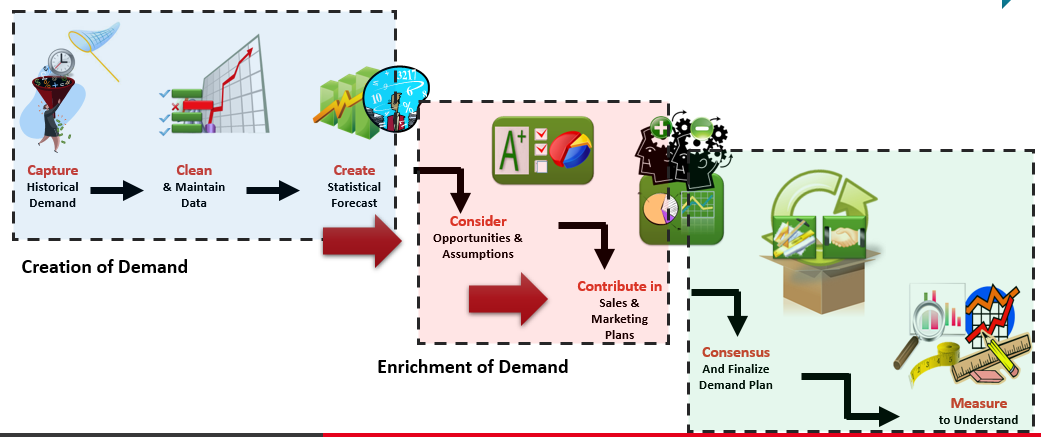
What it does: AI predicts how much product to make, so factories avoid overproducing or running short.
Courtesy: Birlasoft
Getting this wrong is expensive. Overproduction ties up cash in unsold inventory. Underproduction causes stockouts and lost sales. AI models solve this by studying historical sales data, seasonal patterns, and buying trends. They also factor in outside signals market shifts, social media sentiment to catch demand changes early.
Result: manufacturers can adjust production plans in real time and reduce waste when supply chains hit unexpected disruptions.
2. Supply Chain Optimization for Revenue Management, Powered by AI
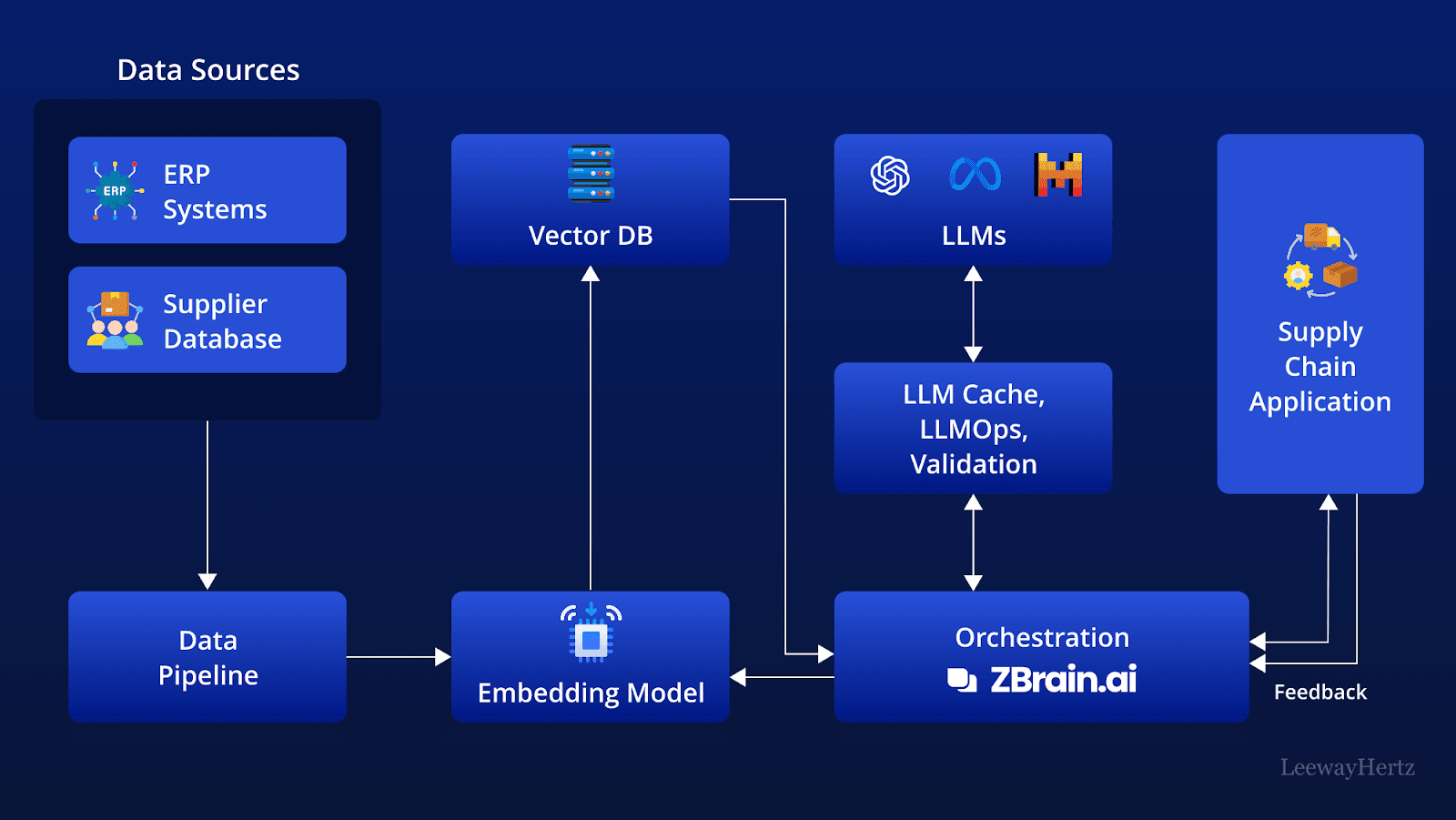
What it does: AI tracks demand, inventory, and logistics together, then automates decisions that used to require manual review.
Courtesy: LeewayHertz
By analyzing real-time data across the supply chain, AI systems predict demand fluctuations and optimize stock levels automatically. Many manufacturers now use AI to auto-generate purchase orders and replenishment requests based on live demand forecasts, no manual triggering required.
Result: lower operating costs, fewer stockroom surprises and better customer satisfaction.
3. Automated Quality Inspection & Defect Analysis
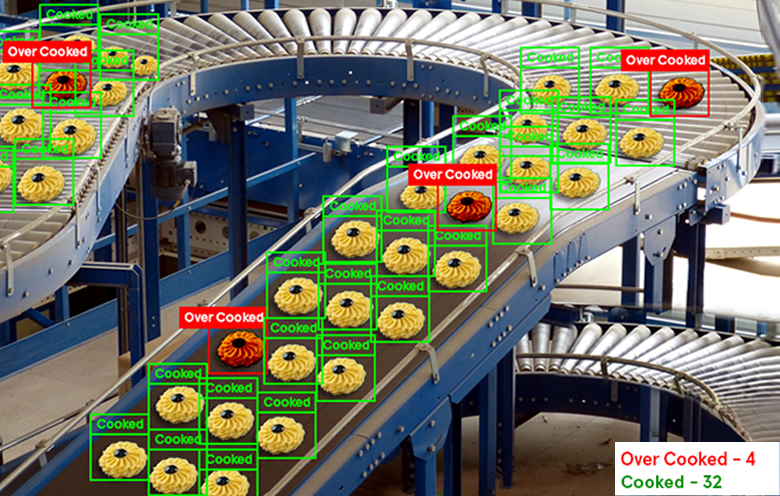
What it does: AI-powered computer vision spots product defects faster and more consistently than human inspectors.
Courtesy: Softweb solutions
Cameras paired with AI models scan products on the line and flag defects in real time. Foxconn have implemented AI-powered computer vision systems to identify product errors during the manufacturing process, resulting in a 30% reduction in product defects. These systems can inspect products for defects more accurately and consistently than human inspectors, ensuring high standards are maintained.
Result: more consistent quality, fewer returns, less manual inspection labor.
4. Predictive Maintenance for Equipment and Factory Automation
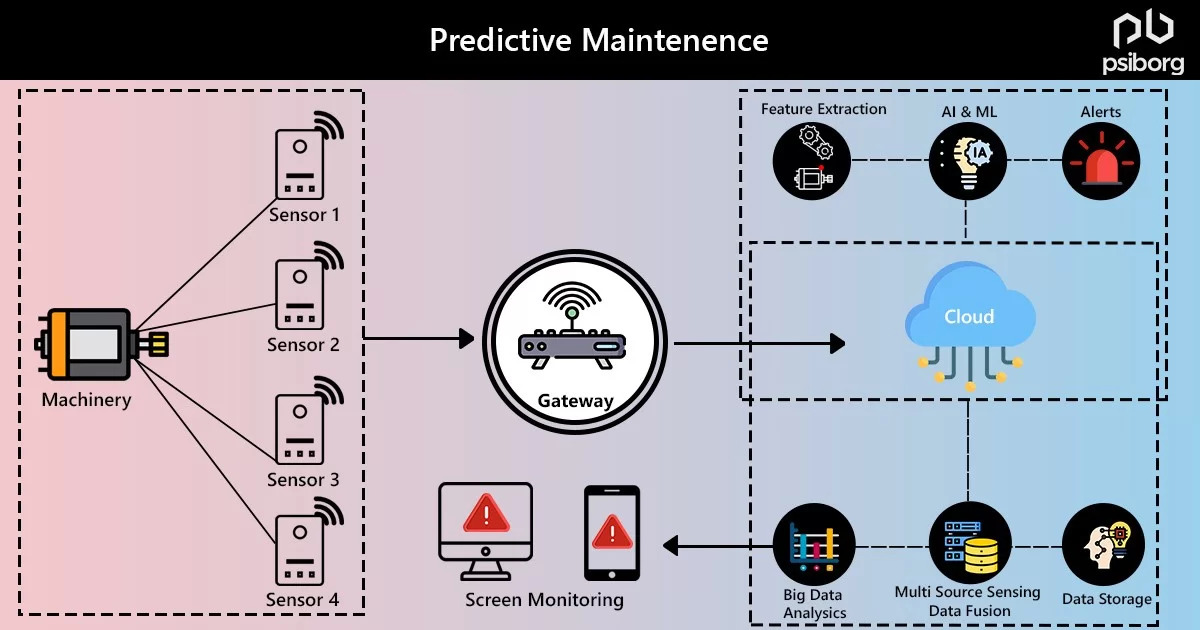
What it does: AI predicts equipment failure before it happens, so repairs happen on a schedule instead of in a crisis.
Courtesy: SmartDev
Unplanned downtime is one of the most expensive problems in manufacturing. Mining, metals, and other heavy industrial companies lose an average of 23 hours per month to machine failures costing millions of dollars industry-wide. AI systems solve this by pulling data from IoT sensors, PLCs, and ERPs to track machine health continuously. When wear patterns start to look like early failure signs, the system flags it, and maintenance teams can schedule repairs before a breakdown happens.
Result: less downtime, lower repair costs, longer equipment lifespan.
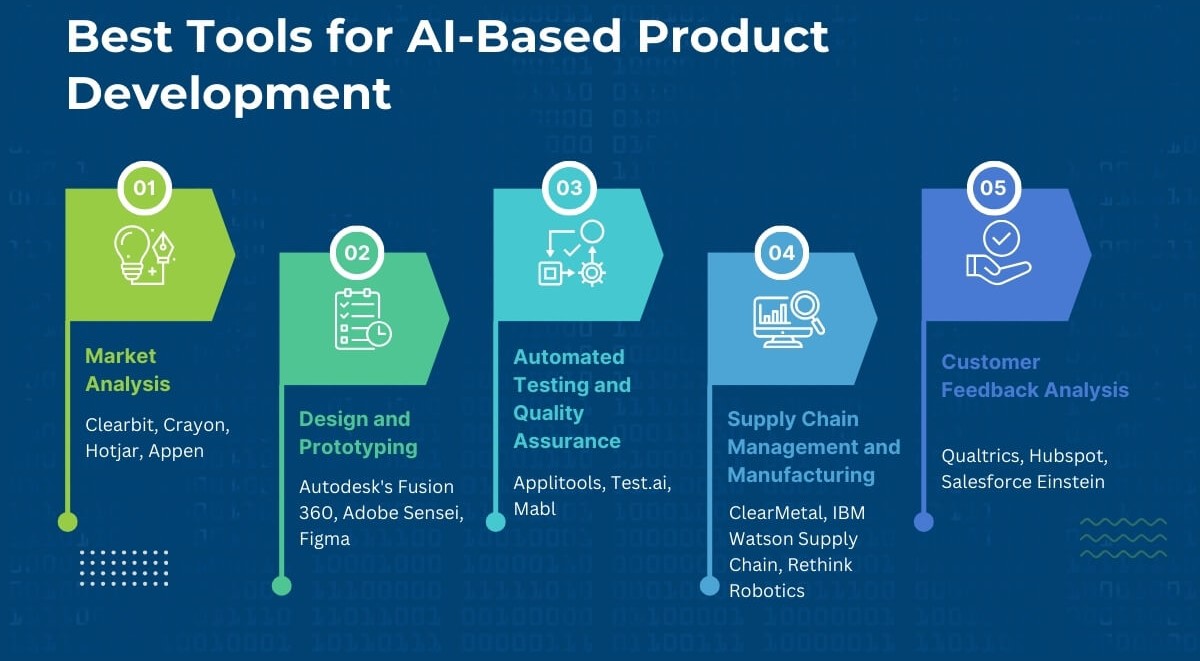
5. Product Design and Development
What it does: Generative AI explores design options a human engineer might not think to try then simulates how each one performs before anything gets built.
Courtesy: Intellinez
AI enhances product design and development by enabling manufacturers to explore innovative configurations that may not be evident through traditional methods. Generative AI allows for the exploration of various design possibilities, optimizing product performance and material usage. AI-driven simulation tools can virtually test these designs under different conditions, reducing the need for physical prototypes and accelerating the development process. This approach not only shortens time-to-market but also results in products that are optimized for performance and cost-effectiveness.
Result: faster time-to-market and products optimized for both cost and performance.
How Leading Manufacturers Use AI Today
Company | AI use case | Outcome |
Siemens | Predictive maintenance, process optimization | Higher efficiency, less downtime |
BMW | AI-driven robots on assembly lines | Better precision, faster production |
Tesla | Quality control, supply chain optimization | Streamlined manufacturing operations |
Airbus | AI-optimized design and production | Better aircraft performance, lower costs |