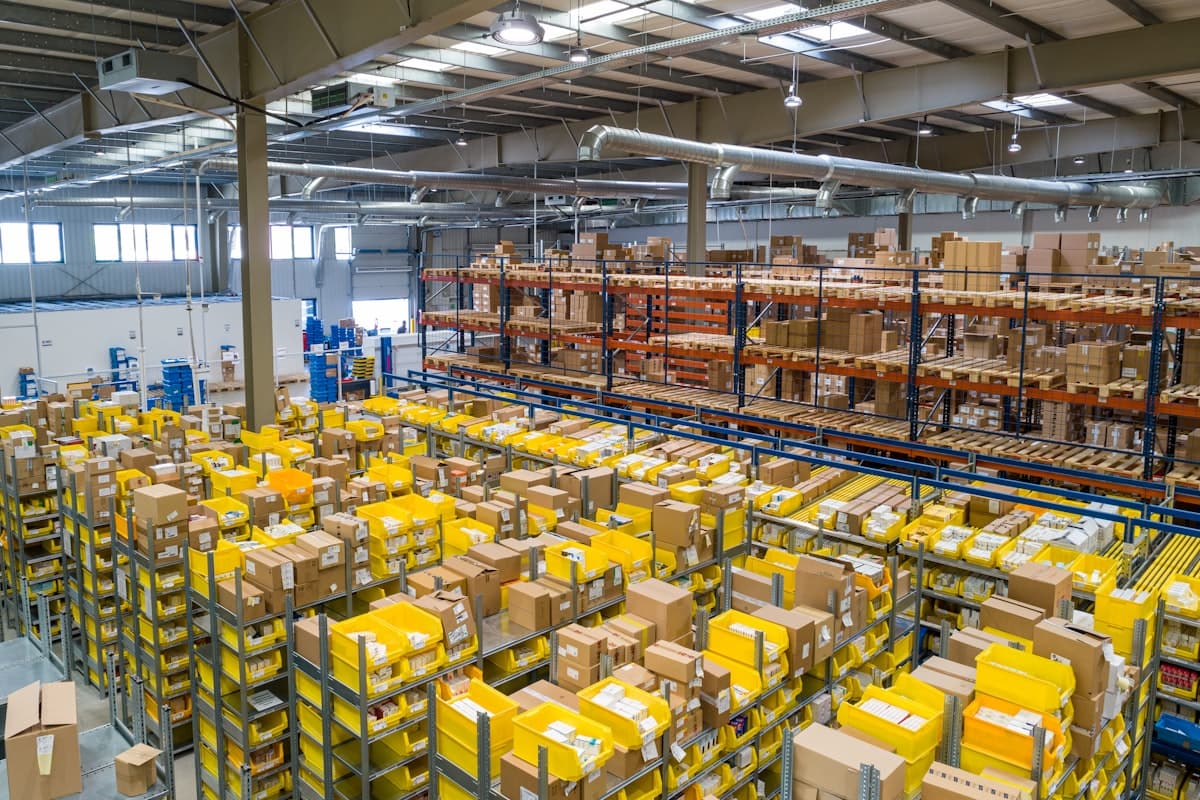
The Distribution Problem at Scale
Distribution companies are built on thin margins. Every inefficiency in order processing, inventory management, or routing compounds across thousands of daily transactions. When your operations depend on manual processes and tribal knowledge, you are paying a hidden tax on every order.
We recently worked with a national distribution company that had grown to 150 people in their operations team. Despite that headcount, order errors were increasing, processing times were getting longer, and the team was burning out. The problem wasn't the people. The problem was that they were doing work that machines should be doing.
What We Actually Automated
The transformation didn't happen overnight, and it didn't start with a massive technology overhaul. We started by mapping every step in their order processing workflow and identifying which steps required human judgment and which were just pattern matching.
It turned out that roughly 80 percent of their orders followed predictable patterns. They came in through email or EDI, needed to be classified, validated against inventory, routed to the right warehouse, and confirmed back to the customer. Every one of these steps was being done manually by someone who could have been doing higher-value work.
We built AI systems that handle the routine automatically. The AI reads incoming orders regardless of format, classifies them, checks inventory across multiple warehouses, selects the optimal fulfillment location, and generates shipping instructions. It handles exceptions by routing them to the right person with all the context they need to make a quick decision.
The Results Surprised Everyone
Within six months, the operations team went from 150 people to 30. But here is the part that matters more: order accuracy improved. Processing time dropped by 40 percent. Customer satisfaction scores went up because orders were being handled faster and with fewer errors.
The 120 people who transitioned out of manual order processing weren't all let go. Many moved into customer relationship roles, quality oversight, and business development. The company redirected human talent from low-value repetitive work to high-value relationship and growth work.
Demand Forecasting Is the Next Frontier
Once the order processing was automated, the next opportunity was demand forecasting. Most distributors still forecast demand using spreadsheet models and historical averages. These models miss the nuances that actually drive demand: seasonal patterns, economic indicators, customer behavior changes, and supply chain disruptions.
AI-driven demand forecasting considers hundreds of variables simultaneously and updates predictions in real time. For this particular client, it reduced stockouts by 35 percent while simultaneously reducing carrying costs by 20 percent. That is money that goes straight to the bottom line.
Starting the Journey
If you run a distribution operation, the question isn't whether AI can help. It is where to start. At Techjays, we begin with a two-week assessment that maps your current processes and identifies the highest-ROI automation opportunities. You get a clear picture of what is possible and what it would take before making any commitments.
The companies that embrace AI-driven operations will have a structural cost advantage that is extremely hard for competitors to overcome. The ones that wait will find themselves competing against organizations that can process more orders, with fewer errors, at lower cost, with better customer service.