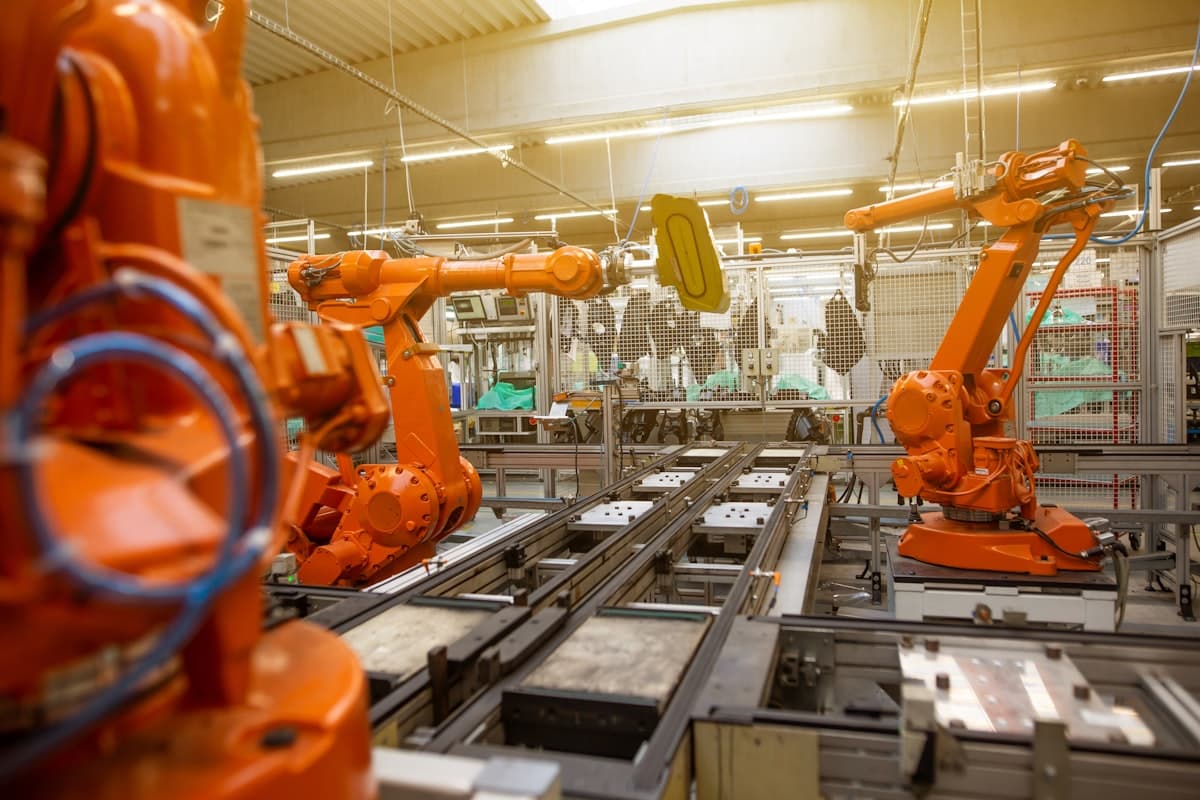
The Factory Floor Is Getting Smarter
Walk into any modern manufacturing facility and the transformation is palpable. Sensors line production equipment. Dashboards display real-time throughput. And increasingly, the decisions about what to produce, when to maintain equipment, and how to allocate resources are being informed - or made entirely - by artificial intelligence.
This isn't the robotic automation of the 1980s. Today's AI in manufacturing operates at the decision layer: analyzing patterns human operators can't see, predicting failures before they happen, and optimizing production schedules across dozens of competing constraints simultaneously.
Predictive Maintenance: Knowing Before Breaking
Unplanned downtime is the silent killer of manufacturing profitability. A single machine failure can cascade across an entire production line, delaying orders, burning overtime budgets, and eroding customer trust. Traditional preventive maintenance - replacing parts on a fixed schedule - either comes too early (wasting money) or too late (causing failures).
AI-driven predictive maintenance changes the calculus entirely. By analyzing vibration patterns, thermal signatures, current draw, and historical maintenance records, machine learning models can predict component failures days or weeks before they occur. The result: maintenance happens exactly when needed, downtime drops by 30-50%, and maintenance budgets shrink because you're only fixing what actually needs fixing.
Quality Control at Machine Speed
Human visual inspection is inherently inconsistent. Fatigue, lighting conditions, and subjective judgment all introduce variability. AI-powered visual inspection systems, using high-resolution cameras and computer vision models trained on thousands of defect examples, catch defects that human inspectors miss - and they do it at production speed.
One automotive parts manufacturer reduced escaped defects by 90% within three months of deploying AI inspection. The system doesn't get tired at 2 AM, doesn't have bad days, and actually improves over time as it encounters new defect types.
Production Scheduling That Actually Works
Most manufacturers still schedule production using a combination of ERP systems, spreadsheets, and tribal knowledge. The scheduler - usually one or two people who understand the entire operation - juggles machine capacity, labor availability, material constraints, and customer priorities in their heads. When that person retires, critical institutional knowledge walks out the door.
AI scheduling systems consider hundreds of variables simultaneously: machine capabilities, tooling changeover times, operator certifications, material availability, shipping deadlines, and even energy costs by time of day. They generate optimized schedules in minutes that would take a human planner days, and they continuously re-optimize as conditions change throughout the shift.
The Path Forward
The manufacturers who are winning right now aren't the ones with the most automation - they're the ones making the smartest decisions. AI gives mid-market manufacturers access to the kind of operational intelligence that was previously available only to Fortune 500 companies with massive IT budgets. The technology is ready. The question is whether you'll adopt it before your competitors do.